The morning after your child ages out of special education, the emails stop. No more IEP invitations, no more progress reports, no more teacher who knows exactly how your child is doing. What doesn't stop is everything else — the medications, the appointments, the behavior plans, the meetings, and the endless need to prove, in writing, what your adult child needs and why.
Parents kept telling us the same thing: "I've been documenting since my daughter was three. She's twenty-four now. I still need this — it just doesn't say 'school' anymore." So we built for that. Beetably now supports adult profiles, right alongside children, on the same plans and the same price.
What changes when your child becomes an adult
The system your family has navigated for years quietly hands you off to a new one. In California, that usually looks like:
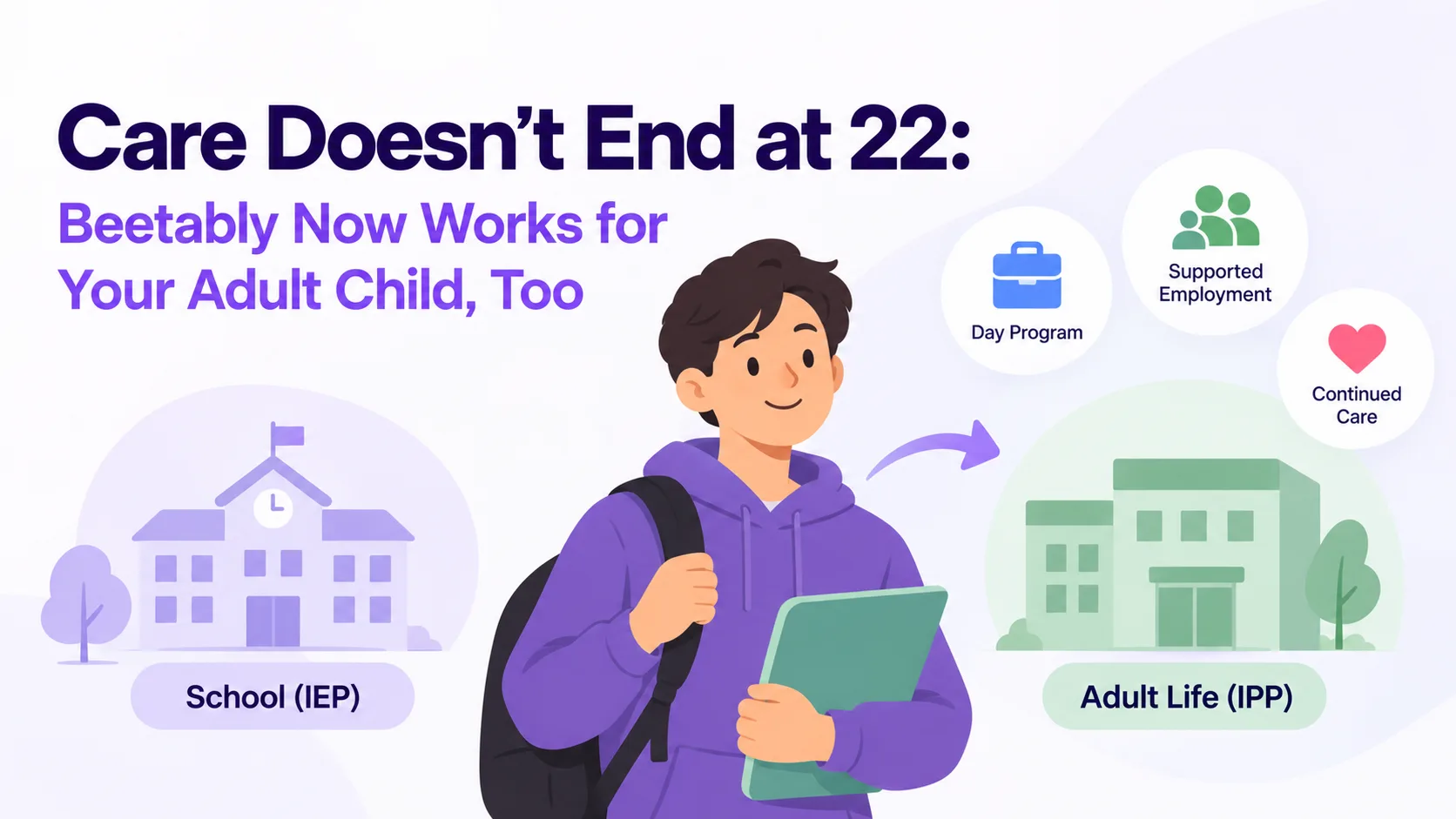
IEP becomes IPP. The Individualized Education Program that guided school services is replaced by the Individual Program Plan through your Regional Center — annual meetings, service coordinators, and authorizations for day programs, supported employment, respite, and independent-living supports.
School becomes a day program or a job. Instead of a teacher and a classroom, you may be working with a program coordinator, a direct support professional (DSP), or a job coach in supported or competitive employment.
A new legal and financial layer appears. Conservatorship or supported decision-making, SSI, IHSS, and Medi-Cal redeterminations all arrive around the same time — each with its own paperwork and its own deadlines.
(Outside California, the names change but the shape is the same: an ISP instead of an IPP, Medicaid waiver services, and guardianship or supported decision-making.)
How Beetably adapts
Pick "Adult" when you create a profile. A simple toggle at the top of the form sets whether the profile is for a child or an adult. Everything downstream adjusts — you can change it later at any time.
The wording follows. "School" becomes "Program," "Teacher" becomes "Program Coordinator," the pediatrician becomes the primary physician, and age shows in years. The school-grade history turns into a program and placement history — day program, supported employment, post-secondary, vocational training — instead of Kindergarten through 12th.
The logs match adult services. When a profile is an adult, the event picker drops the K–12 items that no longer apply (IEP and 504 plans) and keeps what does: IPP / Regional Center meetings, medical appointments, milestones and progress, advocacy notes, communication logs, and of course behavioral and medical incidents.
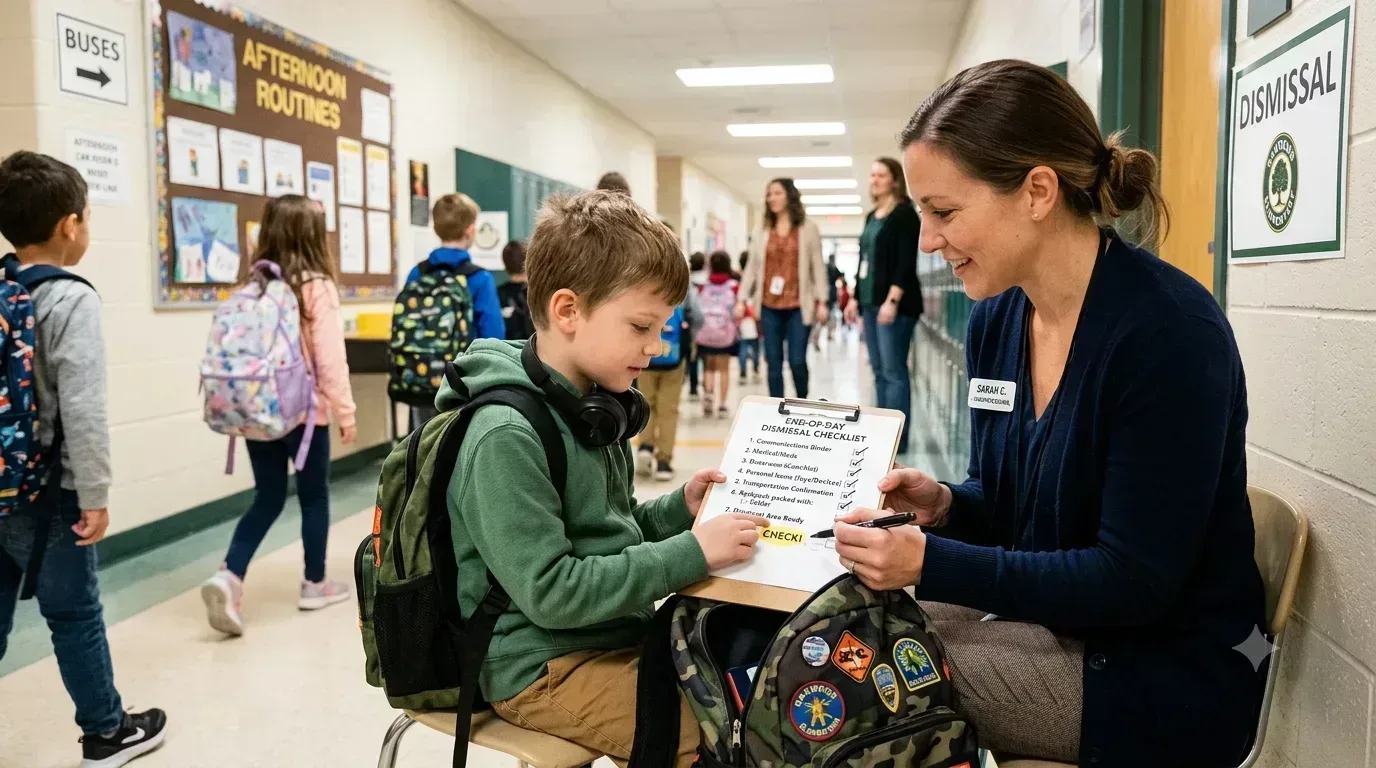
The printable tools speak the right language. The Profile Sheet becomes a personal profile for support staff and DSPs rather than paras and teachers. The dismissal checklist becomes a pickup and transportation checklist for the end of a program day. The Emergency Card swaps school-nurse and teacher fields for program, nurse, and social-worker contacts — the same one-page, first-responder-ready format, worded for an adult.
Why the paper trail matters even more in adulthood
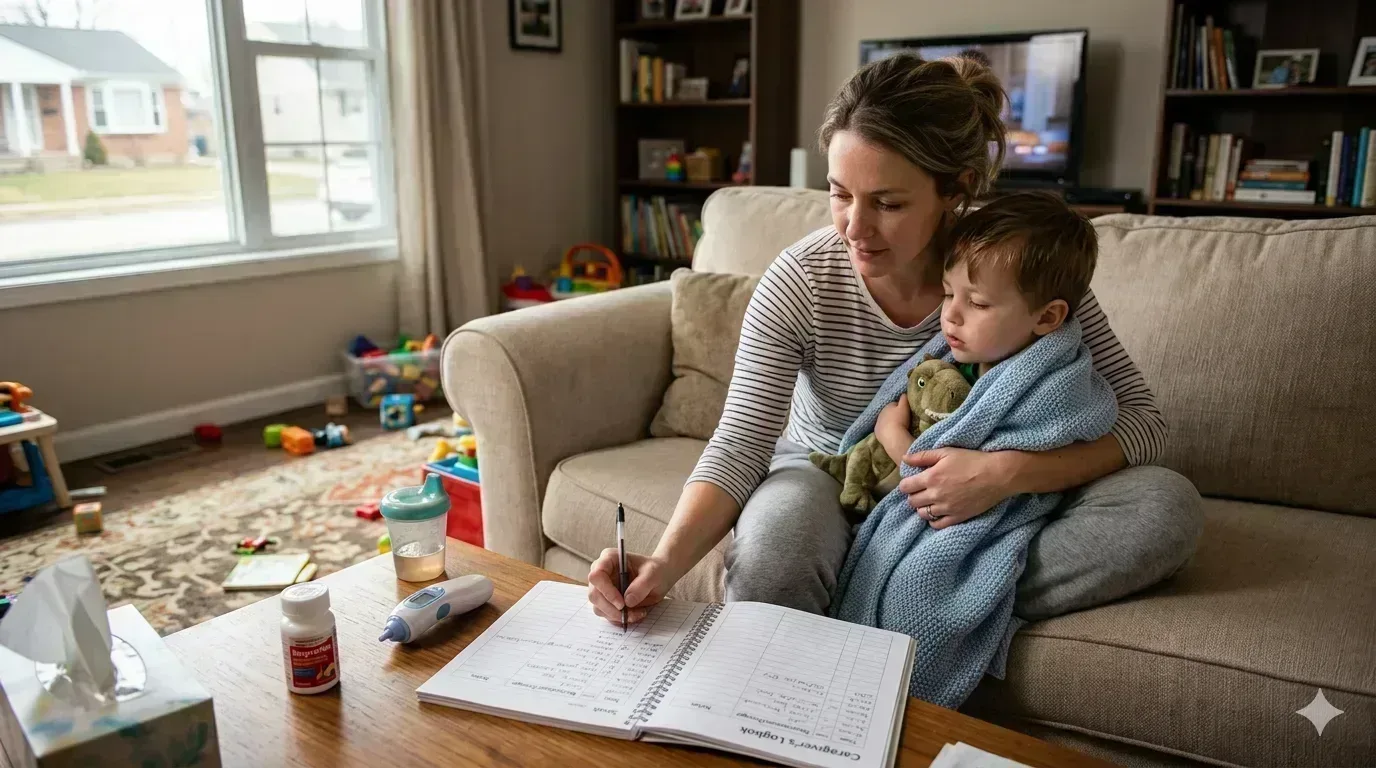
In school, at least one institution was keeping records alongside you. In the adult world, you are often the only person who sees the whole picture — as providers, coordinators, and programs change, sometimes yearly.
When you walk into an annual IPP meeting and the Regional Center asks how the current supports are working, you need specifics: how often behaviors happened at the day program, what actually helped, which appointments led to which changes. When a new psychiatrist adjusts a medication, you need the history the last three doctors built. When a service gets denied, you need the pattern — dates, incidents, and outcomes — that turns "we feel this isn't working" into evidence.
Getting started
If you already use Beetably, adding an adult is the same as adding a child: open My Profiles, click Add Profile, choose Adult, and fill in the details. Existing profiles stay exactly as they are. If you're new, you can start free with one profile and the printable sheets, and add logging and reports when you're ready.
Your child grew up. Your documentation should grow with them — not start over.